

Why More Buyers Are Turning to Vietnam for Sourcing and Manufacturing
Introduction:
A few years ago, Vietnam barely registered on the radar for most international buyers, apart from small-scale handicraft items. China and India were the go-to markets, with established supply chains and scale.
Fast forward to today: Vietnam has become one of the fastest-growing sourcing hubs in Asia. Buyers are moving significant parts of their supply chain here, and not just as a “China plus one” backup plan, but as a serious alternative.
So why Vietnam, and what should buyers know before jumping in? Let’s take a look at the opportunities, the risks, and how to get started.
Vietnam’s Advantages for Sourcing and Product Development
Vietnam has a unique mix of cost efficiency, craftsmanship, and trade access that makes it appealing for sourcing and product development.
- Competitive costs:Labor rates are lower than China, while productivity is improving year on year.
- Craftsmanship:Vietnam has centuries-old craft traditions in bamboo, rattan, ceramics, lacquerware, woodwork and textiles. These add a design edge you won’t find in mass-market factories elsewhere.
- FDI & modern factories:Alongside the traditional craft villages, major industrial hubs like Binh Duong, Bac Ninh and Hai Phong host foreign-invested factories producing at scale.
- Trade agreements:Vietnam is part of the CPTPP and EVFTA, giving preferential access to markets like the EU, Japan, Australia, and Canada.
- Political stability:Vietnam has a consistent, business-friendly government and avoids conflicts, giving buyers and investors long-term security.
The Buyer Challenges You Need to Know
Of course, Vietnam is not without its hurdles. New buyers often make mistakes because they assume it works like China.
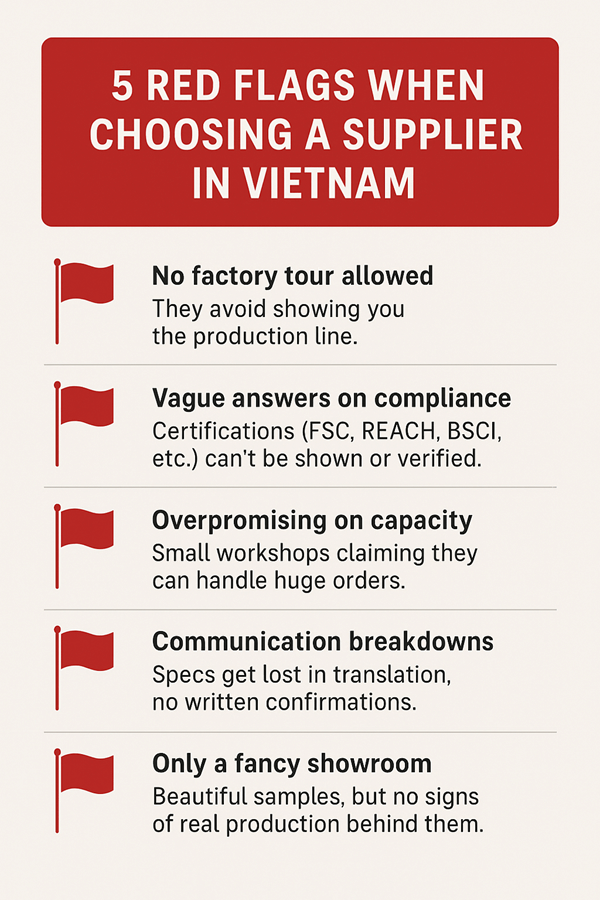
- Scale limitations:Not every factory can handle high-volume orders. Some are still developing capacity.
- Communication:English levels are improving but can still cause misunderstandings. Clear specs and third-party checks are essential.
- Compliance gaps:Some suppliers may lack the certifications international buyers require (FSC, REACH, etc.). Always check before committing.
- Hidden middlemen:Trading companies often present themselves as manufacturers. Without vetting, you risk paying higher prices for less control.
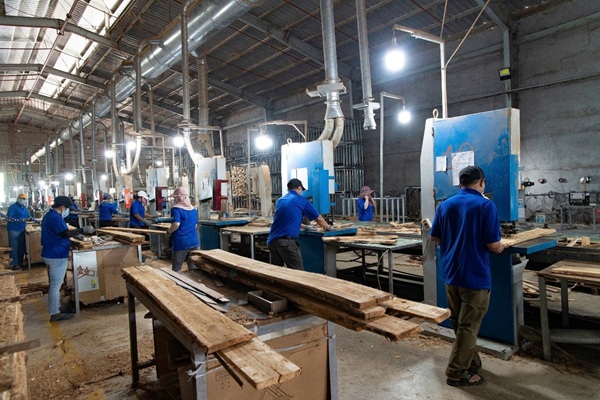
Top Tip: Always ask to see the production line, not just the showroom. It’s the fastest way to separate real factories from traders, and make sure they have the capability to produce your products.
How to Get Started Sourcing in Vietnam
If you’re considering Vietnam for manufacturing your products, here’s a straightforward guide:
- Define your priorities– Do you need low MOQ, sustainable materials, or mass-production capacity? Vietnam offers all three, but from very different types of suppliers. Matching with the right manufacturer is essential for long-term growth. For a new smaller brand, it’s better to find a smaller factory that can give you the priority you need.
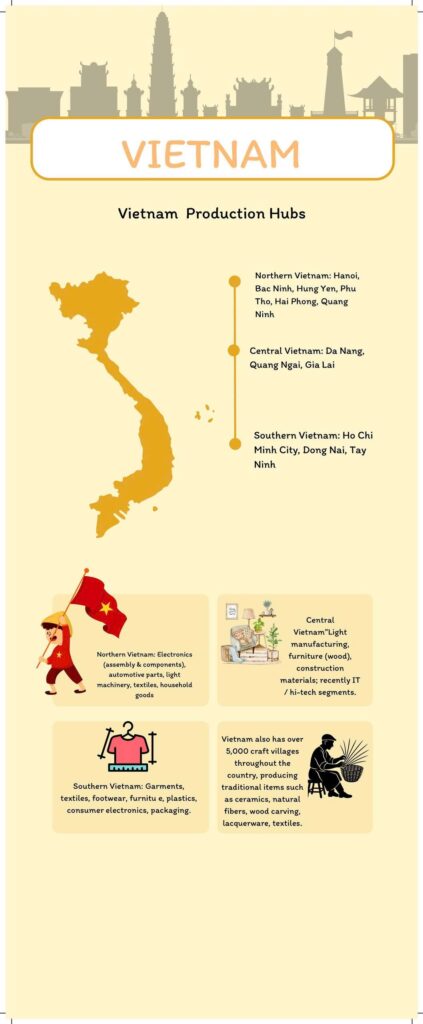
- Get a feel for Vietnam’s factory landscape– You’ll find good factories all over the country, but the North and South do things a bit differently. The trick is picking the type of partner that fits your needs, so you save time and avoid headaches.
- Vet suppliers early– Check factory ownership, capacity, compliance, and references before engaging deeply.
- Start with smaller orders– Test production runs will show you a supplier’s reliability before scaling.
- Build relationships– Vietnam’s business culture values long-term partnerships. Being present (or having someone local) makes a big difference.
A Real Example: Acacia and Rattan Outdoor Furniture
One of our clients wanted to develop acacia and rattan outdoor furniture. They had tried to work directly with local suppliers but ran into problems: inconsistent quality, delays, and miscommunication.
We moved to an experienced Central Vietnam-based manufacturer specialising in this category. After a couple of rounds of sampling and tighter QC processes, they achieved the finish and consistency they needed.
The result: A unique product line that landed in several mid-sized European retailers, at a lower landed cost than their previous supplier in Indonesia.
Why Vietnam Isn’t Just a Backup Plan Anymore
Buyers often start with Vietnam as part of a “China plus one” strategy. But many quickly expand once they see the combination of competitive pricing, unique design input, and growing production capability.
That doesn’t mean it’s risk-free. Vietnam requires careful supplier selection and hands-on management. But for buyers willing to invest the time, it’s a market that can deliver both value and quality.
FAQ: Sourcing and Product Development in Vietnam
Q: What products are best sourced from Vietnam?
A: Vietnam is strong in home décor, furniture, textiles, footwear, and crafted materials like bamboo and rattan. Over recent years, due to increasing FDI investment, it’s rapidly expanding into other categories such as metal, plastics, and electronics.
Q: How do Vietnam’s manufacturing costs compare to China’s?
A: Labor costs are lower in Vietnam, although China has more established infrastructure. Productivity is still catching up in Vietnam, but the overall landed costs can be competitive, especially with free-trade agreements.
Q: Is sourcing from Vietnam safe for new buyers?
A: Yes, but as with any international business, it’s important to vet suppliers carefully. Using a local sourcing partner or third-party QC helps reduce risks.
Final Word From Us
Vietnam is no longer a sourcing secret. It’s a serious player in the manufacturing and export sector, and buyers who move early are often rewarded with better access to suppliers and capacity.
If you’re looking at Vietnam, think carefully about what you need: scale, craftsmanship, sustainability, or speed. The right match is out there, but knowing where to look (and who to trust) makes all the difference.
Want to explore whether Vietnam sourcing is a fit for your product line? Contact us to find out, and to connect with verified Vietnam manufacturers and suppliers
