

Sourcing Agent Vs Going Direct to Factories: Which is Best for your Business?
If you’re considering sourcing products from Vietnam, one of the first decisions is whether to go direct to factories or work through a sourcing agent.
On the surface, going direct sounds simpler and cheaper. But like most things in international trade, the reality depends on your situation, your experience, and how much time you can dedicate to managing suppliers.
The Case for Going Direct
Let’s start with the appeal of working straight with factories:
- Cost control: No extra service fees. You’re dealing directly with the manufacturer.
- Direct relationship: You build a line of communication with the factory, which can sometimes mean faster feedback or better pricing at higher volumes.
- Suitable for experienced buyers: If you know how to draft clear specs, handle QC, and navigate logistics, going direct gives you maximum control.
For large, established importers with their own teams for product development and quality assurance, going factory-direct is often the right call.
The Challenges of Going Direct
That said, factories are not built to guide international buyers through every detail:
- OEM focus: Most expect you to provide designs, specs, and packaging. Few have design or development support.
- Communication barriers: English levels are mixed, and miscommunication is one of the biggest causes of problems.
- Quality ownership: If something goes wrong, it’s on you to find it, fix it, and absorb the delays or costs.
- Limited flexibility: Smaller orders or custom requirements can be difficult without someone negotiating on your behalf.
In other words, if you don’t have time to manage suppliers closely, you may end up with costly surprises.
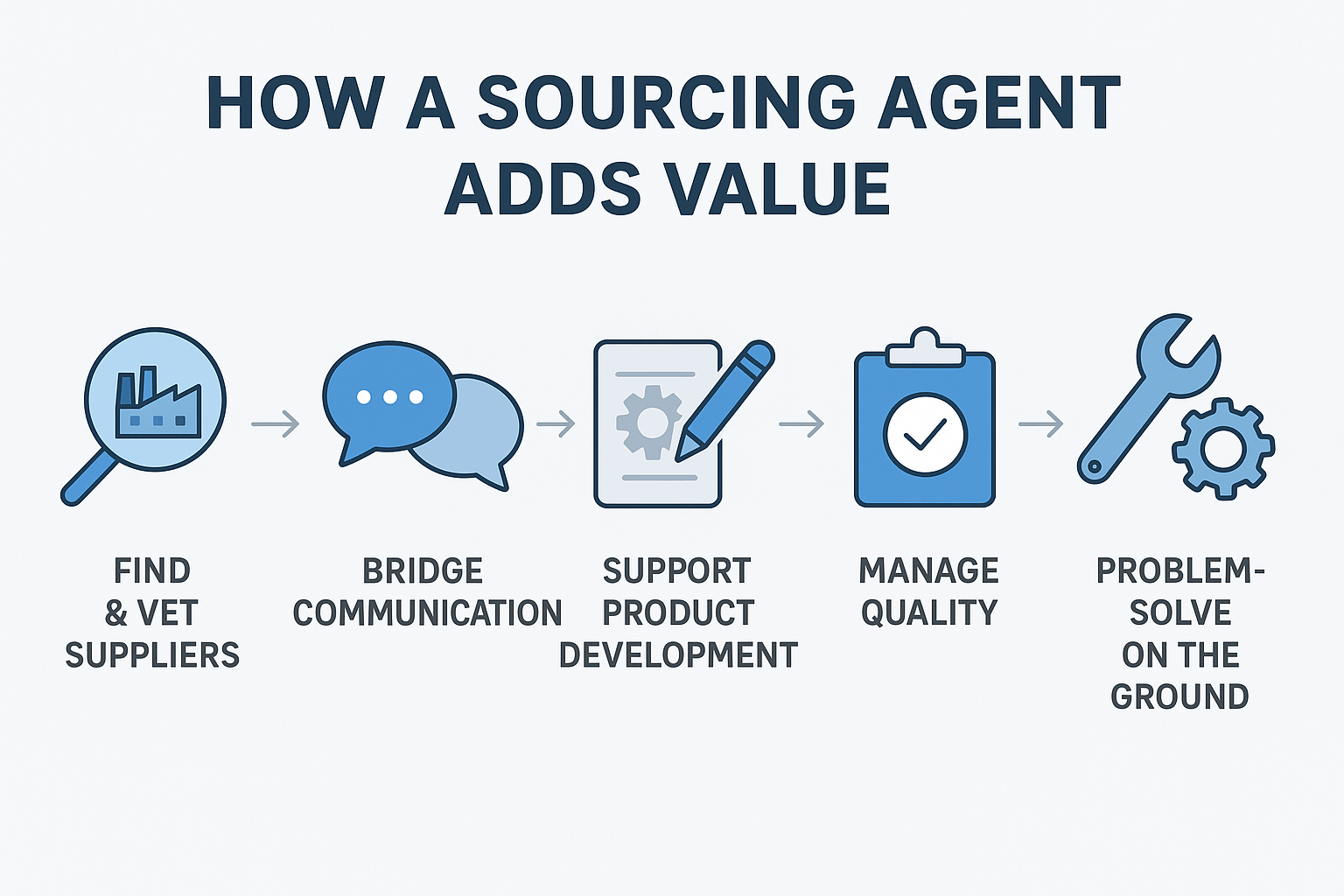
How a Sourcing Agent Adds Value
This is where sourcing agents come in. A good agent isn’t there to replace the factory, but to make sure the process runs smoothly from start to finish.
What a sourcing agent does:
- Find and vet suppliers: Filtering hundreds of options to find the right fit for your product, MOQ, and standards.
- Bridge communication: Making sure details are understood on both sides.
- Support product development: Helping turn ideas into production-ready designs.
- Manage quality: Checking samples, monitoring production, and arranging inspections.
- Problem-solve on the ground: Handling issues quickly so they don’t derail your order.
- Add local knowledge: Knowing which regions specialize in what, and how to navigate cultural and business differences.
In short: factories focus on making. Agents focus on making sure it works for you.
“Aren’t Sourcing Agents Just Middle-Men?”
It’s a fair question. Here’s the difference:
- Middle-men: Add margin, hide the factory, and keep you locked into their channel. You never really know who’s producing your goods.
- Sourcing agents: Work transparently. You know the factory, you pay them directly, and the agent works for you, not the factory.
The best agents see themselves as an extension of your team, not as a layer in the way.
So, Which Is Better?
The answer depends on where you are in your sourcing journey:
- Direct to factories makes sense if you:
- Have large, repeat orders.
- Already know the ins and outs of importing.
- Have your own QC and compliance team in country.
- Working with a sourcing agent makes sense if you:
- Are new to Vietnam or testing the market.
- Don’t have the time to manage factories directly.
- Need smaller MOQs or more flexibility.
- Want to reduce risk while still building direct factory relationships.
FAQs
Q: Do sourcing agents increase the price of products?
Not if the relationship is transparent. Good agents don’t take any commissions from factories. You pay the factory directly for production, and the agent separately for services. A good agent may actually save you money by avoiding errors, delays, and quality issues, and in some cases securing better costs due to established factory networks.
Q: Will I lose direct contact with the factory if I use an agent?
No. A professional agent introduces you to the supplier, keeps communication flowing, and ensures both sides are aligned. You still know exactly who is making your goods.
Q: Can an agent help me with small orders?
Yes. Many factories prefer large volumes, but agents often know which workshops or suppliers are more open to smaller MOQs, especially important for new brands.
Q: What happens if there’s a production problem?
When you go direct, you’re on your own to resolve it. With an agent, you have someone on the ground who can step in quickly, find solutions, or arrange rework before it becomes a shipping disaster.
Q: Do I still need third-party inspections if I have an agent?
In many cases, yes. Agents can handle basic QC, but third-party inspections add an extra layer of assurance, especially for high-value or complex orders. Think of them as complementary, not overlapping.
Direct vs Agent: Quick Comparison
| Factor | Direct to Factories | With a Sourcing Agent |
| Cost | No agent fee | Agent fee, but fewer risks & delays |
| Communication | Potential language & cultural barriers | Clear, consistent communication |
| Flexibility | Limited, especially for smaller MOQs | Easier to negotiate flexibility |
| Quality Control | 100% your responsibility | Shared – agent monitors & supports |
| Problem-Solving | You handle issues remotely | Agent solves problems locally |
| Best For | Experienced importers with large volumes | Newer buyers or brands testing the market |
Key takeaway: Factories make the product. Agents make sure it works for your business.
Final Word From Us
Both ways can work. Going direct gives you maximum control, but it also puts all the responsibility on your shoulders. A sourcing agent doesn’t replace the factory, they just make the process manageable, reliable, and less risky, especially when you’re starting out.
In the end, it’s not about adding a middle step. It’s about having the right partner on the ground so your sourcing strategy actually works.
Top Tip: Play the long game. Building relationships in Vietnam takes time. Whether through an agent or direct, consistency and clear communication matter more than one-off price wins.
If you’re weighing up whether to go direct or work with an agent, get in touch with A-Up Sourcing. A no-obligation chat can help you see if having someone on the ground in Vietnam is the right move for your sourcing strategy.
