


Why Manufacturers Stop Replying to RFQ’s
You spend time preparing an RFQ, send it to ten manufacturers, and only two reply. Or worse, they reply initially and then disappear. It’s frustrating, but manufacturers rarely ignore enquiries without a reason.
To understand why this happens more often than you’d expect, you need to understand how manufacturers think. Even though both supply products, manufacturers think very differently from trading companies.
A trading company’s main objective is simply to generate as many sales opportunities as possible. Manufacturers operate very differently. Every new enquiry requires them to decide whether the project is commercially viable before they can even think about pricing it.
Quoting an RFQ isn’t just about adding up material and labour costs. Depending on the product, manufacturers may need to involve several departments before they can even provide a quotation.
Because of that, they quickly decide whether a project is worth investing time in. If it doesn’t look commercially viable, many simply move on.
Most manufacturers aren’t sales organisations. They’re experts at making products, not chasing enquiries. If they don’t think a project is a good fit, they’re far more likely to move on than spend time explaining why.
This article is designed to get you thinking like a manufacturer. Once you understand how they assess new enquiries, it becomes much easier to understand why they stop replying and what you can do differently.
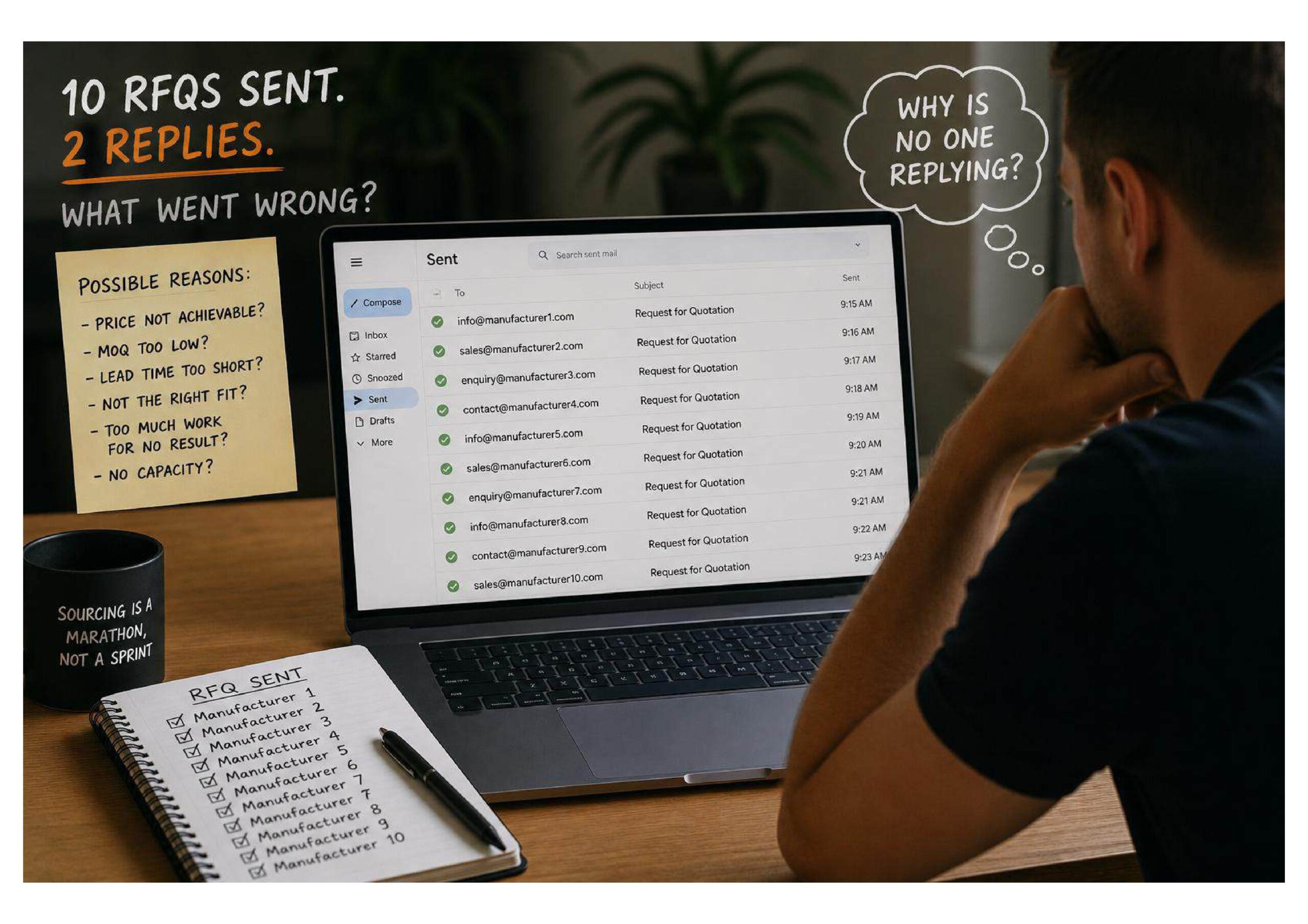
Your enquiry isn’t commercially viable
This is probably the biggest reason manufacturers don’t reply.
Every factory has to decide where to spend its time. Preparing a proper quotation isn’t just a case of plugging numbers into a spreadsheet. They usually need to check material costs, work out production times, discuss tooling, and sometimes involve their engineering team.
If all that work is for an enquiry that has a low chance of becoming an order, many factories simply won’t invest the time.
There are plenty of reasons why an enquiry might not stack up commercially.
Maybe you’re looking for 100 pieces when their normal orders are 5,000. Maybe your target price isn’t realistic for the product you’re asking them to make. Or perhaps you’re asking them to manufacture something that’s completely outside their expertise.
Developing a brand-new product is a completely different ball game.
If a manufacturer already makes a similar product, putting together a quotation is usually fairly straightforward. But if you’re asking them to develop something new, that’s a much bigger commitment.
It could mean making prototypes, testing different production methods, creating new tooling or moulds, sourcing specialist components, and going through several rounds of samples before there’s even a production order on the table.
The important thing to remember is that manufacturers make their money from manufacturing, not product development. Every hour they spend developing a new product is time they’re not spending on paying production.
If they think there’s a good chance the project will become a long-term customer, they’ll often be happy to invest the time. If they’re not convinced, they may decide it simply isn’t worth taking on.
That doesn’t mean your idea is bad, or that the factory is being difficult. They’re simply making a commercial decision based on the information in front of them.
The good news is that “not commercially viable” doesn’t always mean “not possible”. It may simply mean you’ve approached the wrong manufacturer, or that your project needs more detail before a factory is prepared to invest the time. A smaller factory, a more specialised supplier, or even a different production method could completely change the picture.
That’s why manufacturers aren’t just asking, “Can we make it?” They’re also asking, “Does it make commercial sense for us to quote?”
The RFQ isn’t clear enough
It’s easy to think that a manufacturer will fill in the gaps, but the reality is they shouldn’t have to.
The more information you can give them, the easier it is for them to work out whether it’s a project they can take on and, if so, provide an accurate quotation.
At the very least, your RFQ should include clear dimensions, drawings or photos, material specifications, expected quantities and any packaging requirements. If it’s a new product, it’s also worth explaining where it’ll be sold and the level of quality you’re aiming for.
Quite often, manufacturers aren’t ignoring an RFQ because they don’t want the business. They’re simply not prepared to guess.
I’ve seen buyers send exactly the same enquiry to several manufacturers and get completely different quotations back. Not because one factory was expensive and another was cheap, but because they were all making different assumptions about what the buyer actually wanted.
The less a manufacturer has to guess, the better. You’ll usually get more accurate quotations, fewer surprises later on, and you’re far more likely to get a reply in the first place.
They’re simply too busy
Sometimes the answer is as simple as this… they’re busy.
Many manufacturers, particularly the better-established ones, spend very little time looking for new customers because they’re already working at or close to full capacity. Existing customers and repeat business will almost always take priority over a new enquiry, no matter how good it looks.
Top tip: Ask about current production capacity early in the conversation. A factory might be perfect for your product, but if they can’t fit your order into their schedule, it’s better to know sooner rather than later.
They don’t believe the project is genuine
Manufacturers receive far more enquiries than they ever receive orders.
The reality is that many RFQs never go anywhere. Some buyers are simply testing the market, some are collecting prices, while others disappear after asking dozens of questions. Over time, factories become quite good at spotting enquiries that are unlikely to lead to business.
If you’re contacting a manufacturer for the first time, it helps to introduce yourself properly. A company website, LinkedIn profile, or even a brief explanation of who you are and what you’re looking for can make a big difference.
Remember, you’re deciding whether you can trust the factory. They’re doing exactly the same with you.
You’re contacting the wrong factory
This happens more often than you might think.
Just because a manufacturer makes similar products doesn’t mean they’re the right fit for yours. Most factories specialise in certain production methods or materials, and that’s where their experience lies.
Take metal fabrication as an example. One factory might specialise in tube bending, another in wire products, while another focuses on precision CNC machining. The same goes for furniture. One manufacturer may specialise in solid wood, another in upholstered furniture, while another only works with rattan or other natural materials.
The closer your product is to what they already make every day, the more likely they are to quote, offer competitive pricing and actually want the business.
Your requirements aren’t fully understood
It’s easy to blame language, but in reality that’s only a small part of it.
Most export manufacturers have sales staff who speak good English. More often than not, the bigger challenge is communication and cultural differences. What seems obvious to one side isn’t always obvious to the other, and that’s where misunderstandings happen.
Keep your RFQ clear, use simple language, and include plenty of drawings or photos. The less room there is for interpretation, the better.
Communication works differently
This is another one that’s easy to misunderstand.
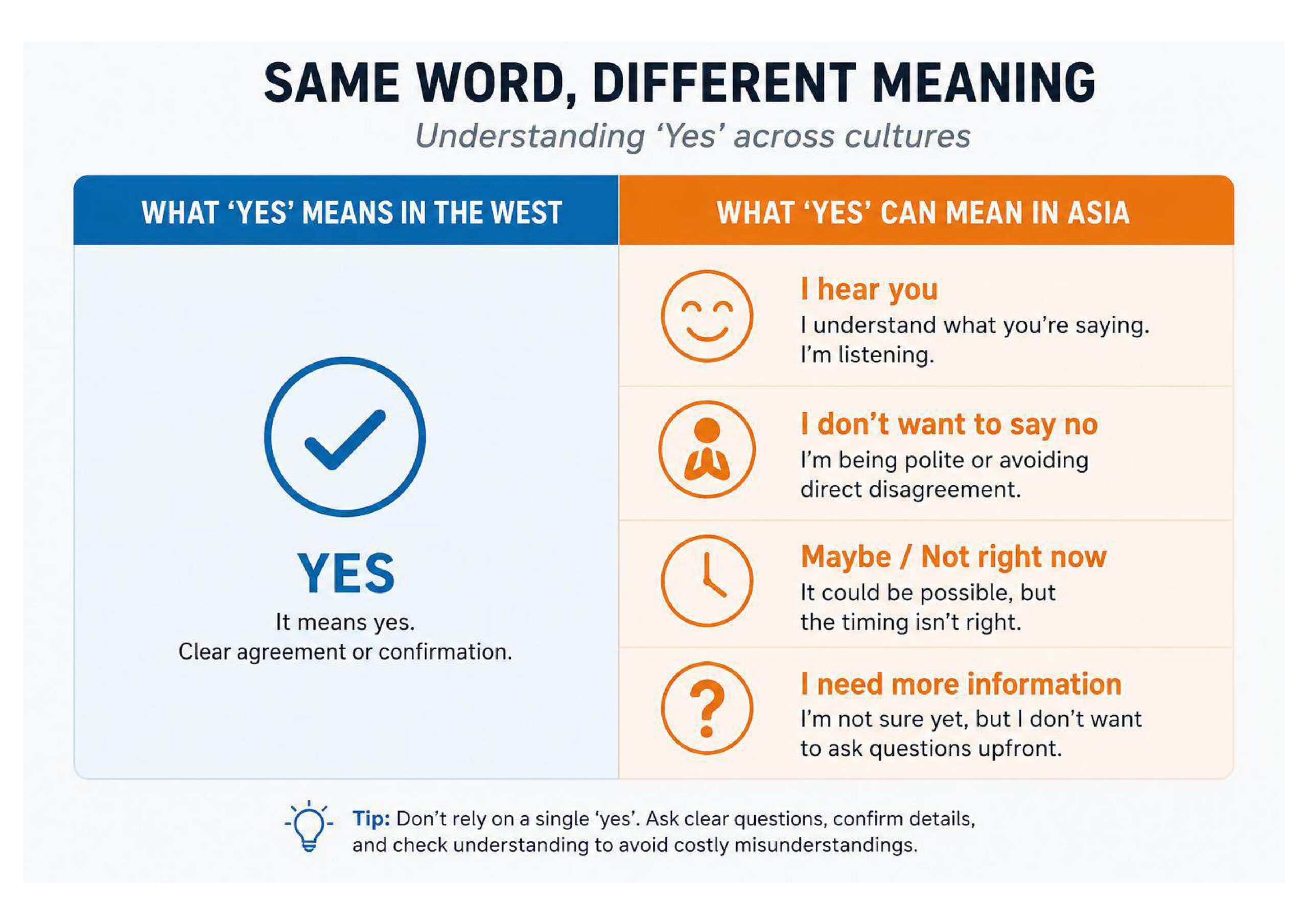
In the West, we’re used to someone saying, “We’ve got your enquiry, just give us a few more days.” In many parts of Asia, it’s more common to wait until there’s actually an answer before replying.
That answer might still be going through engineering, purchasing, production or management. Or, if the answer is “no”, some manufacturers would rather say nothing than give a direct rejection.
For more complex OEM projects, it can take even longer. A manufacturer may need to check material availability, contact suppliers, work out tooling costs or speak to different departments before they can give you an accurate quotation.
Is it the best way to communicate? Probably not. But once you understand that’s how many manufacturers work, it becomes a lot less frustrating. If you haven’t heard anything after a few days, just send a polite follow-up.
Your email never reached the right person
It sounds obvious, but sometimes your email has simply disappeared into the depths of the internet.
It might be sat in a generic inbox, caught by a spam filter, sent to someone who’s left the company, or forwarded around the office without ever reaching the person who can actually help.
Before writing that manufacturer off, send a polite follow-up or try another contact. Sometimes it’s not that they’re ignoring you… they genuinely never saw it.
So what can you do differently?
The good news is that most of these problems can be avoided.
You can’t make every manufacturer reply, and you probably wouldn’t want to. The aim isn’t to get more replies, it’s to get replies from the right manufacturers.
A few simple changes can make a big difference:
- Do your homework first. Spend a bit of time finding manufacturers that are genuinely suited to your product instead of sending the same RFQ to everyone you can find.
- Give them enough information. A clear, detailed RFQ will nearly always get better results than a one-page enquiry with a couple of photos.
- Be realistic about quantities. If you’re starting small, say so. If you have plans to grow, tell them. Manufacturers like to understand where the project could lead.
- Introduce yourself. A few lines about your company, your market and what you’re trying to achieve helps build confidence that you’re a genuine buyer.
- Follow up. If you haven’t heard anything after five to seven days, send a polite email. Quite often that’s all it takes to get things moving again.
- Don’t treat it as a numbers game. Sending the same generic RFQ to 200 manufacturers usually creates more work, not better results. A handful of well-matched manufacturers is almost always a better approach.
Not sure whether you’ve included everything? We’ve put together a simple RFQ checklist covering the key information most manufacturers need before they can quote.
